Pages

Thursday, 29 August 2013

Finished Work and New Beginnings

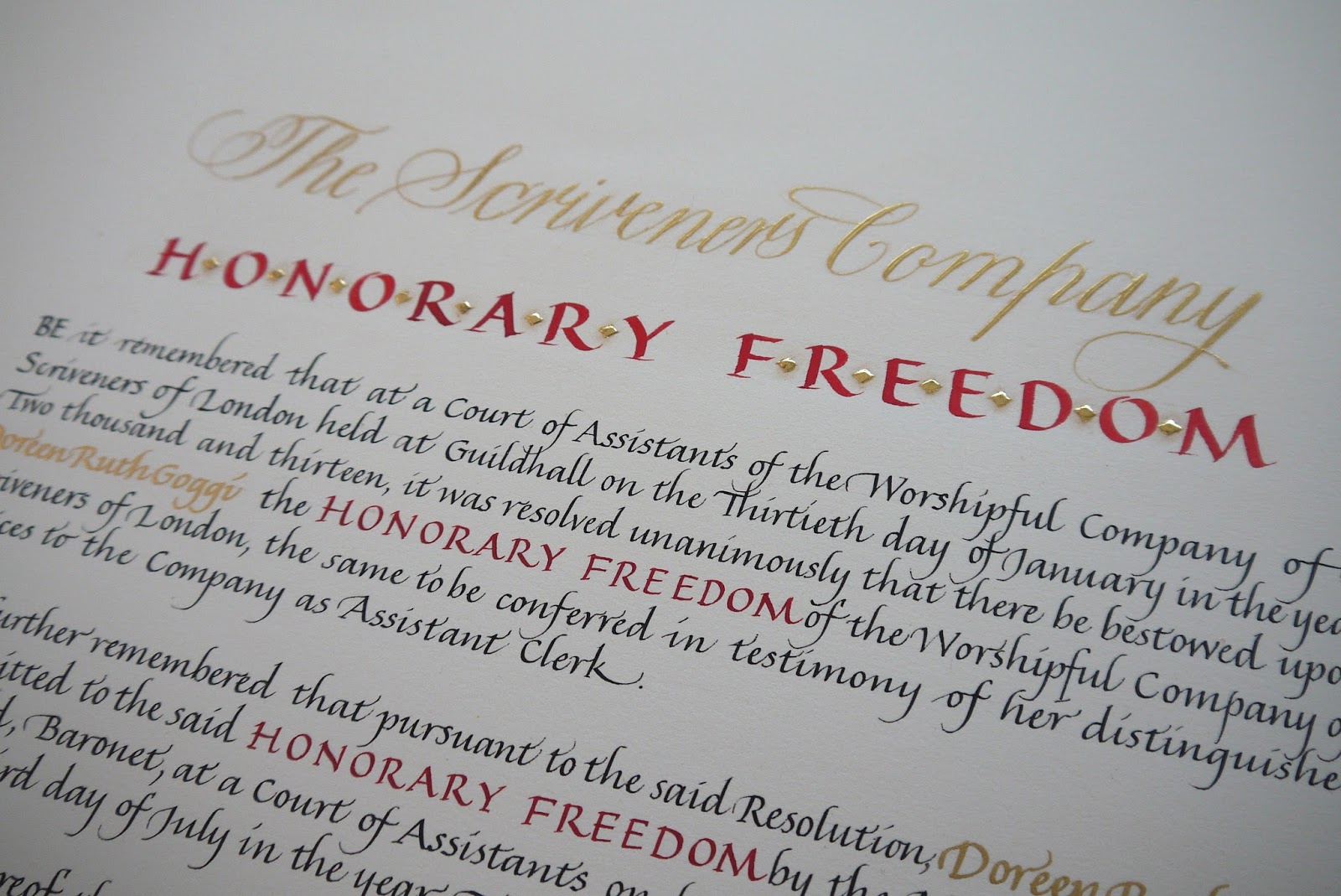
Phew! At last I have finished the biggest commission I have ever undertaken. I will reveal all when I have been paid. I seem to have spent most of this beautiful summer indoors working. 

I have taught three special workshops for my class and others and it has been good to meet people again who have been on my mailing list for some time. It is a time consuming process planning a good workshop taking at least a whole day to prepare and often many materials to buy in order to sell enough for beginners to try something out. It does not always work out to be cost effective either and I have decided I need to be much more business like.


 I have started by writing up some price plans for commissions so I do not have to make individual quotes for every email enquiry. I am seriously considering giving a discount to clients who make the effort to visit me - these commissions tend to be much more satisfying as I can get a real idea of what someone wants by talking to them and seeing their reaction to different pieces of work rather than by the stilted process of email where brevity can come across as rudeness.


I feel the need to educate clients more about the process of creating a piece of calligraphy - it really isn't the same as hand writing and it is the invisible process of trials, planning, ruling up and rubbing out that takes the time. The actual process of completing a piece is the most rewarding and sometimes the easiest bit. Don't forget the years and years of learning new hands, practising and developing skills too.


Now I want to spend a little time on some work for myself and I am going to start by finishing a book I started in an Oxford Scribes Workshop in June with Edward Wates inspired by his work and that of his mentor Hans Joachim Burgert, such as this below:


Tuesday, 28 May 2013

Recent commission

This is a piece I completed recently using shell gold for the decoration.

botanical illustration at Kew

Well this is the final tally after two weeks work - not a lot to show really! I am pretty sure I shall pursue this interest but maybe with a different teacher - I would like to see how some other people approach the subject.


This is the one I am most pleased with but I didn't get to finish it as the method we were taught was incredibly slow and didn't allow for watercolour washes to build up the background colour, working only in layers of tiny dots of very washed out watercolours.


Thursday, 18 April 2013

Back to the Drawing board


Time to do a little more work on my leaves in the morning. I am sticking to dots for the camellia and hatching for the ivy. I am using a Gilot 404 now and sumi stick ink.


Now back to the challenge of measuring in three dimensions - I don't find it easy with the dividers - I would much rather stick to my old skills of comparing shapes and looking at negative space. I do spend a lot of time scanning the object and my drawing - but a bit like finding the sculpture inside a piece of stone I prefer to end up with a clean line from a very light sketch and then rubbing out the mistakes. This is not the way we are being taught which instead concentrates on measuring every single detail and vein with dividers and plotting it on the page. When working from a habit, or whole plant, this has to be done on an imaginary piece of glass in front of the plant so that everything is exactly life size.


I do however find it useful to use the dividers to scale up from a section under the microscope - I'm only working at 10.5x magnification at the moment and the drawing is x3.


Visit to the Herbarium at Kew Gardens

Day Three and we are taken on a tour of the herbarium at Kew.


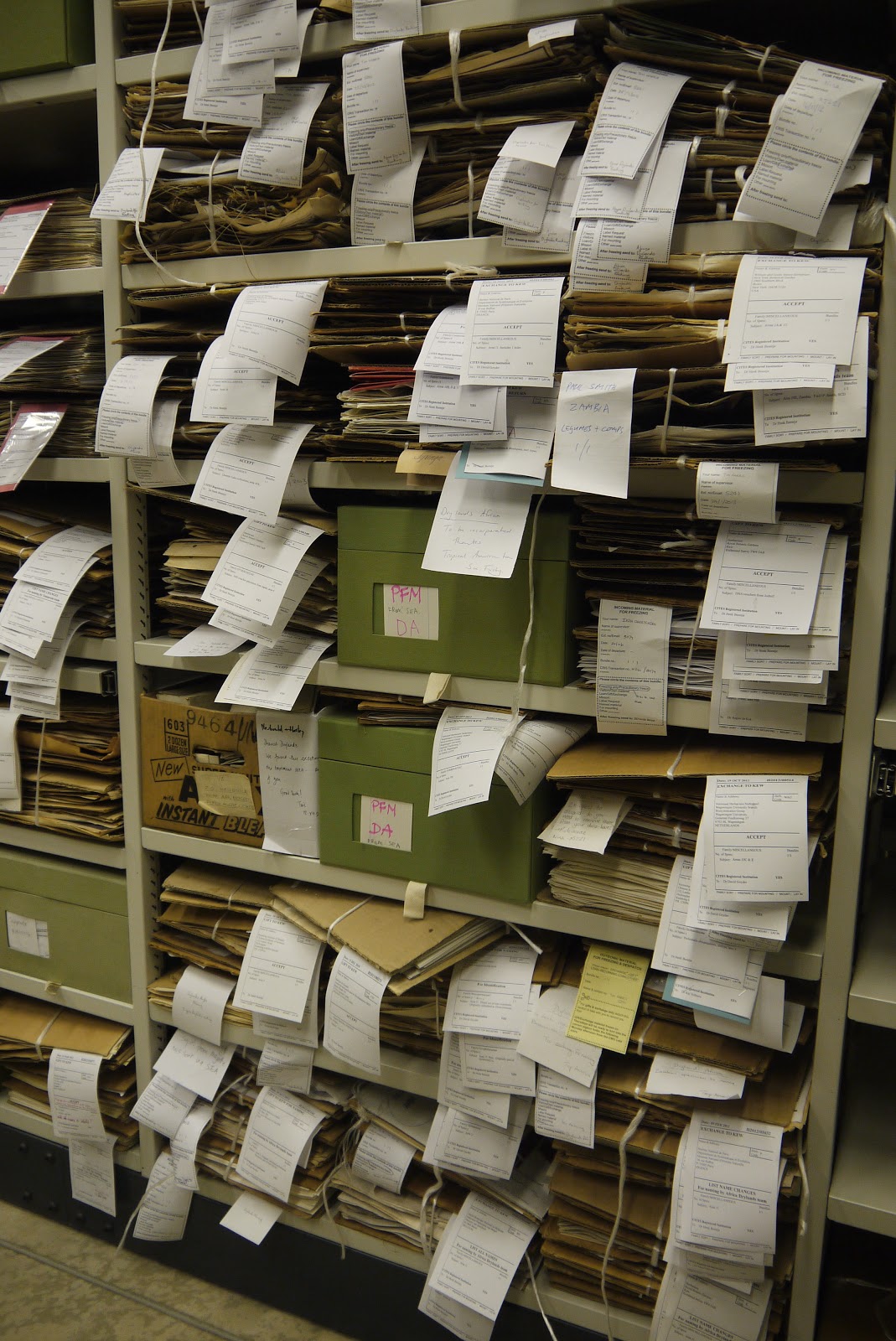
This is where specimens are put that have been borrowed or presented to Kew. I was surprised to see that they are attached to newsprint and kept between pieces of cardboard, tied up with string. It all seemed surprisingly low tech if not a bit cheap and didn't seem to relate to the importance and science that was going on but it has worked for a couple of hundred years so why change it?


This was in the 'spirit room' where some samples are pickled in a mixture of water, alcohol and formulin.


Was this Wing A or B, C, D or E? Anyway it was one of the oldest parts of the building which has been extended every 30 years or so to house the collection as it has grown.


A newer Wing.


Some of the different ways a plant is recorded: the actual plant, dried, pressed photographed and drawn to very precise rules.


Records from the East India company in their mahogany cases. These samples can only be used at Kew and are not available to borrow.


Tuesday, 16 April 2013

Building skills - botanical illustration

I am taking time off from calligraphy for two weeks - driving up and down to London's Kew Gardens which should be the best place in the world to study botanical illustration. 
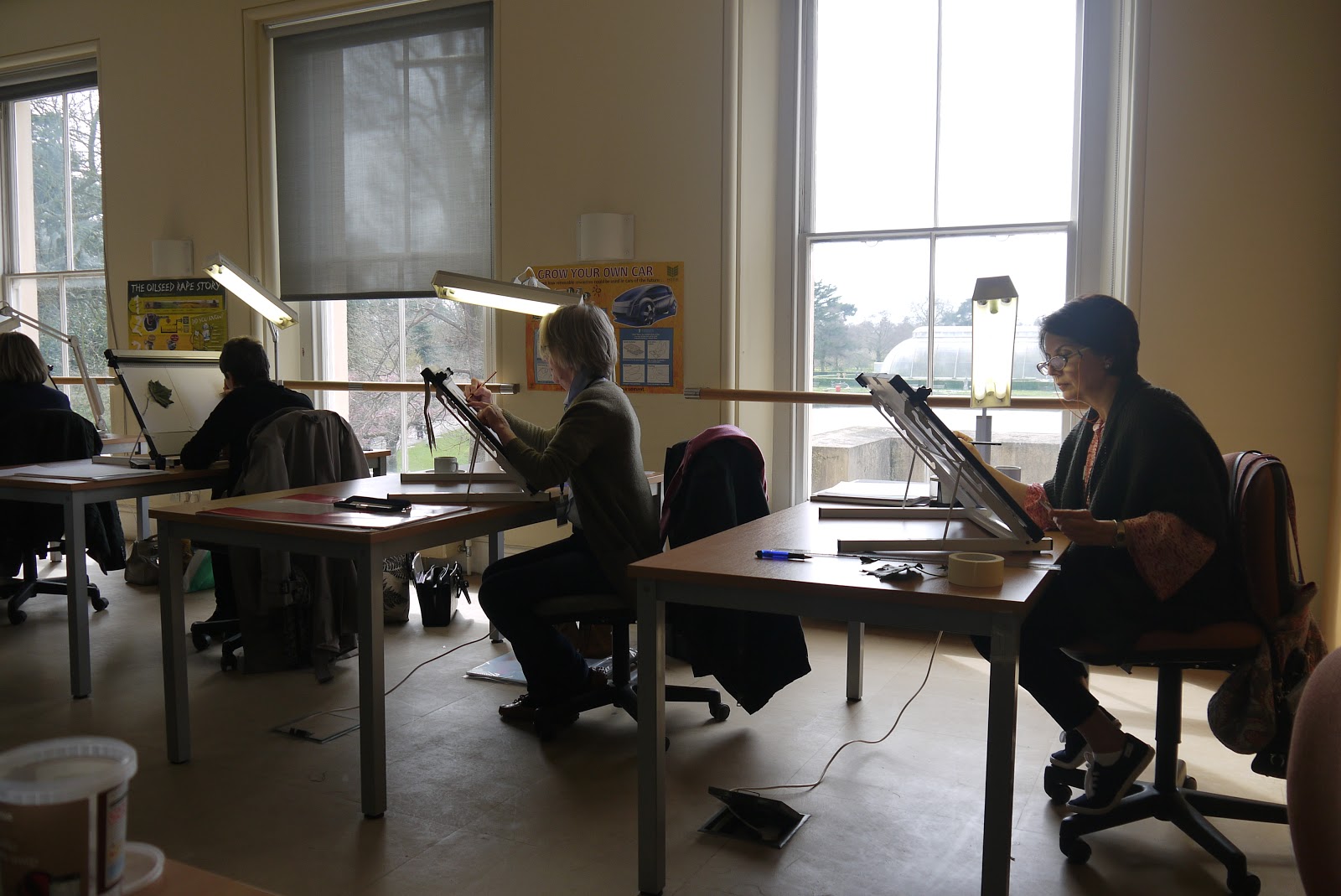
After a two and a half hour drive (I think it was the first Monday after the school holidays for the rest of the country) up the M4, I was last to arrive and got the desk at the very back of the room but I just scraped in by the start at 10.30am. 


I was reassured to see I fit the demographic - not a single man and most of the women looked about my age - though I was pleased to see there were several younger!


The first task - choose a leaf and then draw it - but while holding dividers worth £100 in one hand and measure every single thing - my drawing is much too approximate! It helps if the leaf is as flat as possible too.


I had another go with an ivy leaf - decided it would save a lot of time to use a grid - this is with 2H pencil on Bristol board which I don't think I have used before, very hard and shiny and not my usual style but this is to be inked in and is for serious scientific use and has to be accurate above all else.


Time to start with pen and ink - should be ok at this - decided to use my new Walker copperplate/spencerian nib and had to use the Sumi ink I had as I left my inkstone at home but it was a good choice. This is a bit of practice on the inaccurate drawing from yesterday.


I soon got carried away and started experimenting with a Brause pointed nib, and walnut ink - quickly rejected the old Rotring rapidograph (.25 nib much too big) and started playing with continuous tone in 2H pencil at the top. You can see a little bit of me trying to explain about pointed pens and copperplate to non calligraphers.


Now time to get serious with the more accurate drawings - inked in and working in tone on the Camelia leaf....

Tuesday, 19 February 2013

Poetry collaboration with Radley College

Last year Oxford Scribes were asked if they would like to take part in a joint exhibition with Radley College, a private boarding school for privileged boys near Oxford. They would write the words and we would produce calligraphy inspired by these poems.

An exhibition was planned for March 2013.

A group of calligraphers, including me, went to visit the school in September and were invited to lunch in the panelled dining room before demonstrating how we plan a piece of calligraphy to the five boys who turned up. I showed a Powerpoint of the collage piece that I started at Malvern - see post from October 2012 Mick Paine Workshop.

Finally in November the poems had been written and were distributed among Oxford Scribes - preferences were taken into account where possible and all poems were allocated to calligraphers with some people being asked to do 2 pieces.

Some of us have met together since then to share ideas and find starting points for the work. We looked at suitable colours, layouts and old copies of Letter Arts Review etc for inspiration.

This is my first poem in the form I first saw it:


I wish I could take language


I wish I could take language, and
Unroll it like a dusty carpet.

I would lay it out on the ground;
I would clean the regular patterns.

The smell of sappy wood and candle wax,
Or something older still.

I would keep its surface unblemished,
And keep away the dirt and filth.

I wish I could take language, and
Remove its signs of wear

Where new tears have been created,
Where colours have worn away.

I wish I could take language
And heal its wounds,

Wounds we have formed words for.

Joshua Dernie


This is my final piece for 'I wish I could take Language' - I was inspired by the colours of turkish kelims, suggested by the line 'unroll it like a dusty carpet' - and decided to use this lovely textured paper which I had in my store. I found it was impossible to use a pen without picking up the fibres, so I had to use a pointed brush. I kept the design fairly free, compensating for lack of space by overlapping and shortening words and using ampersands where necessary.

My second allocated poem was:


Mirror


I am a picture that can't not be,
bound and bordered in what you see.

I am you trapped in this place,
now and forever lost in a face.

I sit in your thoughts
and hide in my dreams.

I live in a lie
and it mutes my screams.

I question life
that is not what it seems.

And I have no answer
For I am not me.

Callum Godfrey

I chose this piece because I saw it as a book or using some kind of device to create a reflection and I had several initial ideas but I kept coming up against the same problem i.e. that the first two verses were so much longer than the rest and it looked top heavy. The capital M is much wider than the other letters of the title too which did not help. I had had in mind the effect of broken glass and reflections but after several attempts and the equivalent of about three full days working on it, was still not happy with the background.


Version two and still the problem of the long verses at the top even though I had broken the lines in two. It was better in capitals than italic (done in charcoal pencil here) but it just wasn't working - so I went back to the computer and tried some quick layouts in Word with the two first verses next to each other and then the whole poem started to make sense as statement and response.


So this is my final version using W&N silver gouache with a little white in it and a dark red reminiscent of the back of an old mirror with the opposite colour used to pick out the dots between the words, a device used in old manuscripts. The hand used is based on the cursive roman I have worked with before with a few personal adaptations e.g. the curly G inspired by the David Jones workshop before Christmas. This final piece probably took 6 hours to letter also with a pointed brush with each letter built up of several strokes - it was starting to flow more easily by the end of the page!